How Inclusive Education is Changing Lives for Children with Disabilities in Kenya
Ensuring that every child—regardless of ability—receives a quality education is both a moral imperative and a practical necessity for societal progress. In Kenya, where nearly 10% of the population lives with some form of disability, traditional schooling systems have long fallen short of accommodating diverse learning needs. The Disability Empowerment Accessibility Network (BDEAN) is on a mission to shift this paradigm. Through targeted early childhood literacy initiatives and tailored Deaf‐education programs, BDEAN is not only opening classroom doors but also empowering children with disabilities to thrive academically, socially, and emotionally.
1. The Landscape: Why Inclusive Education Matters
Barriers to Access: Physical inaccessibility of schools, lack of assistive materials, and limited teacher training often exclude children with disabilities from formal education.
Consequences of Exclusion: Without foundational literacy and numeracy skills, these children face lifelong economic marginalization and social isolation.
Inclusive education goes beyond placing children with disabilities in mainstream classrooms; it requires adapting curricula, environments, and teaching methods so that every child can learn, engage, and succeed.
2. BDEAN’s Approach to Early Childhood Literacy
2.1 Foundational Skills in the Early Years
BDEAN’s Early Learners’ Program focuses on children aged 4–8, a critical window for language and cognitive development. Key components include:
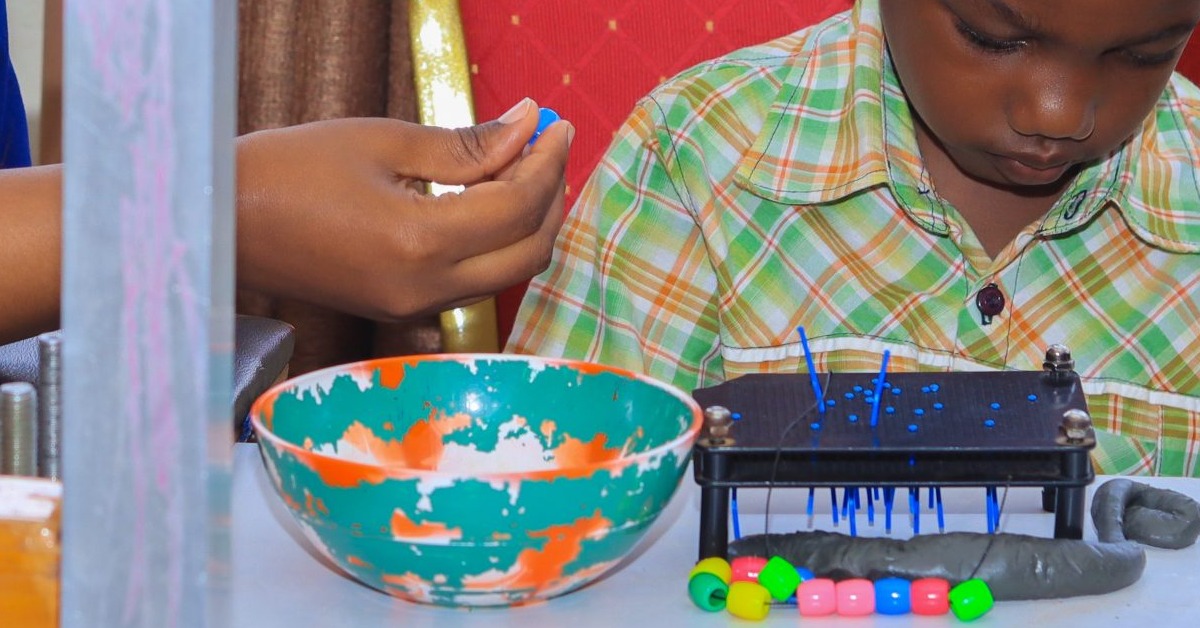
Customized Storybooks: Illustrated materials featuring large print, high-contrast images, and simple, repetitive text to support visual and cognitive needs.
Multisensory Phonics Workshops: Sessions where children learn letters and sounds through tactile cards, sand trays, and interactive games.
Parental Engagement: Training caregivers to continue reading and phonics exercises at home, reinforcing progress made in the classroom.
2.2 Case Study: Amina’s First Words
Amina, born with cerebral palsy, struggled to grasp letters and sounds in her rural classroom. After joining BDEAN’s program:
She began recognizing common words like “mama” and “papa” using textured flashcards.
Within six months, she could read aloud simple storybook pages—her first taste of literacy independence.
Her mother reports that Amina now eagerly joins neighborhood reading circles, proud to show off her new skills.
3. Tailored Deaf Education: Spotlight on Sign Language and Visual Learning
3.1 Promoting Kenyan Sign Language (KSL)
For Deaf children, access to language is the gateway to all other learning. BDEAN champions KSL by:
Teacher Certification Courses: Training mainstream and special‐needs educators to become KSL‐proficient, reducing reliance on scarce specialized schools.
Visual Learning Labs: Classrooms equipped with tablets preloaded with sign‐language dictionaries, animated story apps, and captioned videos.
Peer‐Support Clubs: Weekly gatherings where Deaf and hearing children learn KSL together, fostering mutual understanding and social inclusion.
3.2 Case Study: David’s Digital Classroom
David, a Deaf ten‐year‐old in Kisumu, was previously isolated in a class with no sign‐language support. Through BDEAN’s Visual Learning Lab:
He uses an interactive tablet app that narrates stories in KSL.
His teachers, newly certified in KSL, communicate instructions directly, eliminating the confusion of second‐hand translation.
David’s grades in science and social studies have risen by two grade levels in one year—evidence that language access transforms academic engagement.
4. Measurable Impact & Community Transformation
Enrollment Boost: In the past three years, BDEAN’s partner schools have seen a 35% increase in enrollment of children with disabilities.
Literacy Gains: Over 500 early‐learner participants now read at or above grade level for their age group.
Teacher Capacity: More than 120 mainstream teachers across five counties are now KSL‐certified.
Beyond the numbers, communities report greater awareness of disability rights, and families describe newfound hope as their children discover academic success and peer friendships.
5. Overcoming Challenges & Scaling Up
While progress is encouraging, obstacles remain:
Resource Constraints: High costs of assistive materials and limited funding for digital labs.
Geographical Gaps: Remote areas still lack trained educators and infrastructure.
Cultural Attitudes: Persistent stigma can discourage families from enrolling children with disabilities.
BDEAN’s Next Steps:
Launching a low‐cost “Literacy in a Box” kit of reusable tactile materials.
Partnering with county education boards to integrate KSL training into teacher‐education colleges.
Conducting community‐led advocacy campaigns to shift perceptions around disability and learning.